
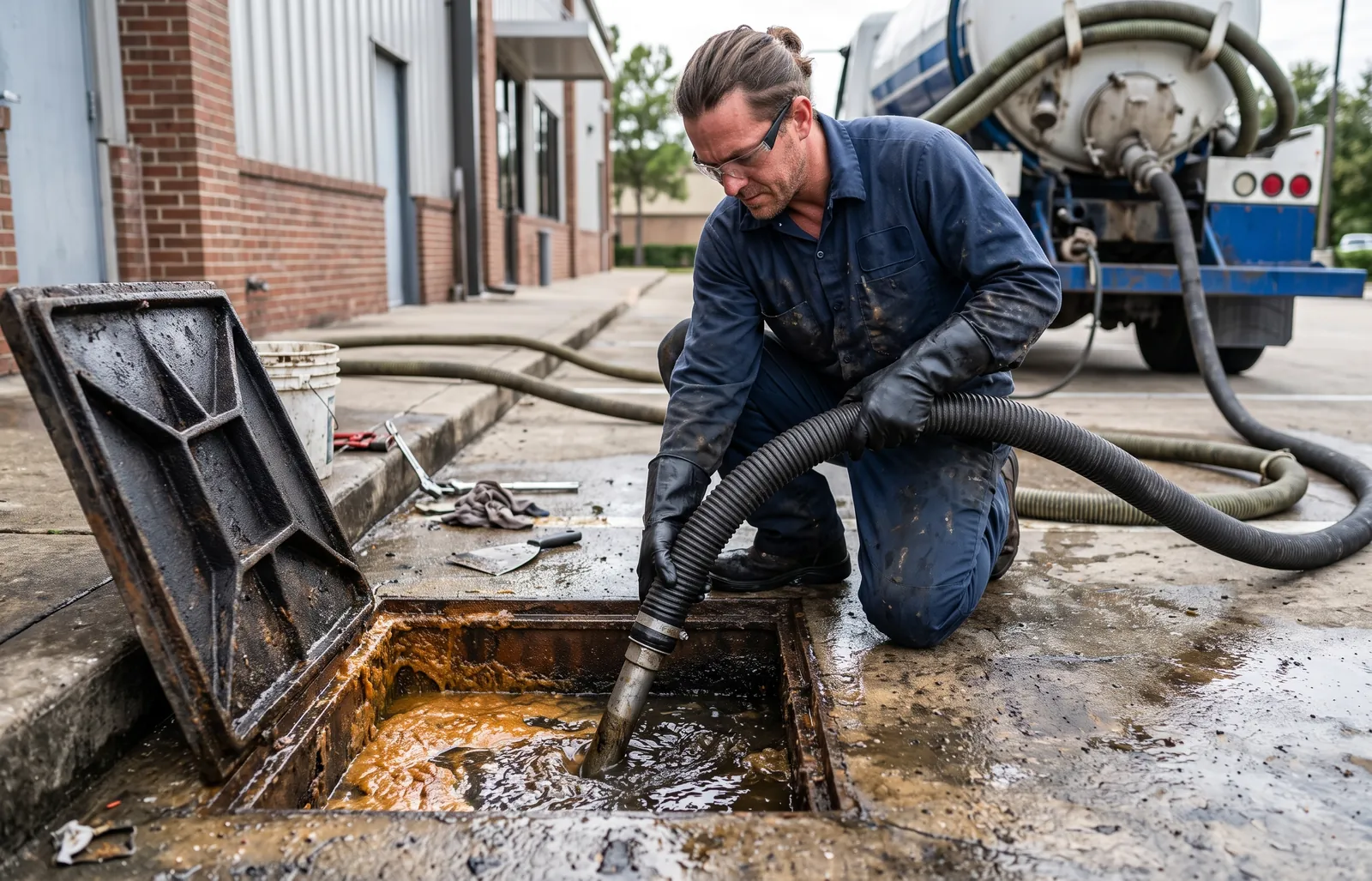
Grease trap cleaning that keeps you compliant
A grease trap works by slowing wastewater enough for fats, oils and grease to separate and float while solids sink. It only works while there is room for both layers. Once the trap fills, grease passes straight through into the sanitary line, and that is how a kitchen ends up with a backup during dinner service.
Cleaning a trap properly means pumping the full contents, scraping the walls and baffles back to bare surface, and checking the inlet and outlet tees. A trap that is only skimmed keeps a hardened layer that reduces its capacity every cycle, exactly like a septic tank that is only pumped.
Every visit ends with a manifest. The disposal record showing where the waste went and when. Your health inspector will ask for it, and not having it is a violation on its own.
How often a Conroe kitchen needs service
Most restaurants fall between monthly and quarterly. The interval depends on the trap size relative to your volume, what you cook, and whether the kitchen scrapes plates before washing. The standard benchmark is to service before the combined grease and solids reach a quarter of the trap depth.
We set the interval from what we actually find on the first few visits rather than a default number, then adjust as your volume changes. Nothing is gained by billing you for a service you did not need yet.
Commercial septic pumping
Businesses on septic run a different load profile than houses. Volume is concentrated into operating hours, flow is heavier and less predictable, and downtime costs money. We schedule around your hours, including before opening and after close, and we size the visit so it finishes in one trip.
- Restaurants, bars and commercial kitchens
- Retail, offices and shops on septic systems
- Apartment buildings and multi-unit residential properties
- Churches, schools and event venues with irregular peak loads
- Job sites, RV parks and temporary facilities
- Car washes, shops and properties with interceptors
Route contracts
If your property needs service on a predictable cycle, a route contract locks in the schedule and the price. You get a fixed visit window, the same crew each time, priority dispatch if something goes wrong between visits, and all disposal documentation filed and available when you need it. No calling to book, no wondering whether you are overdue.