
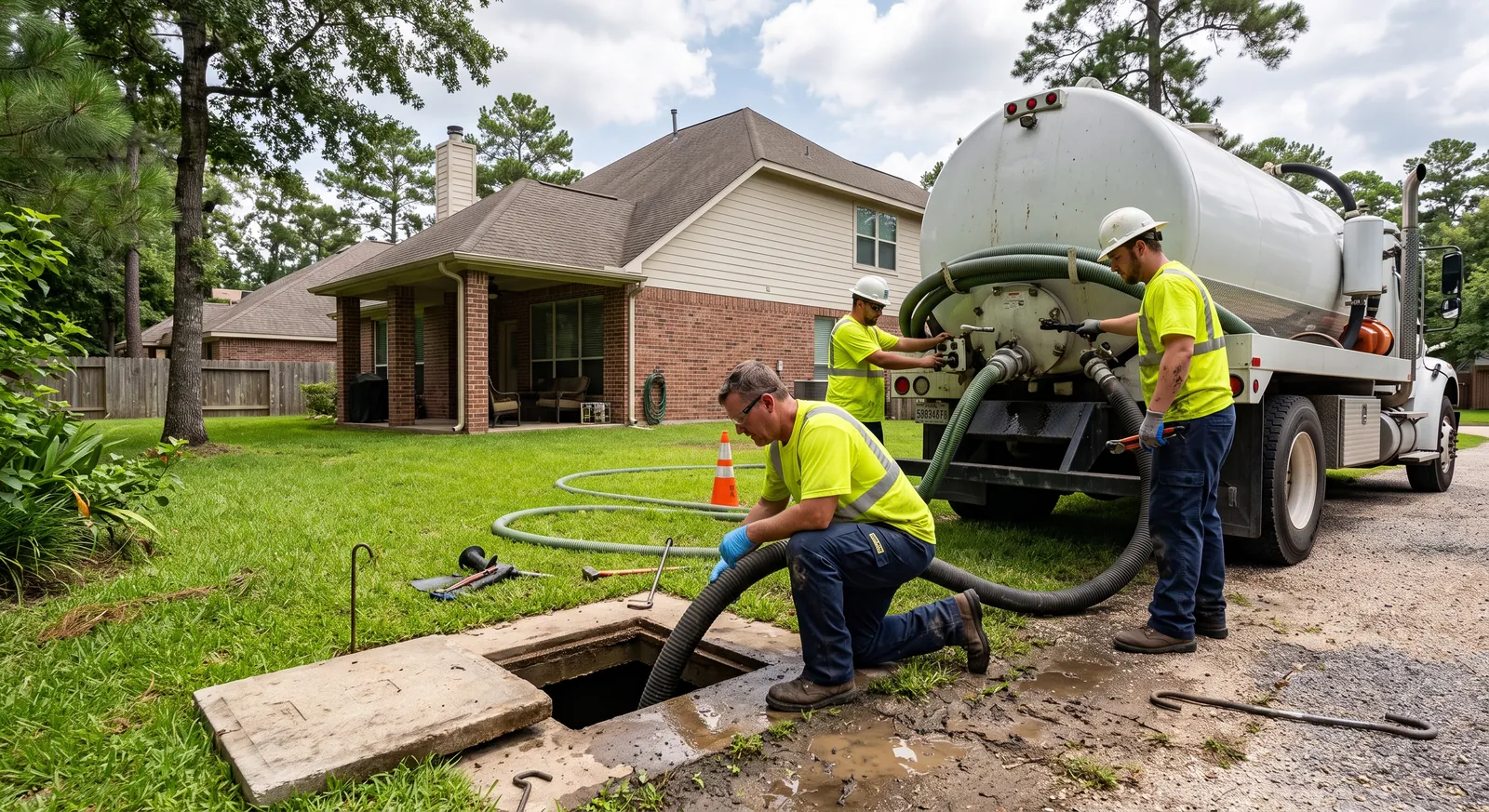
What a septic pump out actually removes
Wastewater entering your tank separates into three layers. Grease and soap float to the top as a scum mat. Solids sink to the bottom and compact into sludge. The clear liquid in the middle, called effluent, is the only layer meant to leave the tank and reach the drain field.
A pump out removes all three, restoring the tank to full working volume. The point is not that the tank is full, because a working tank is always full of liquid. The point is that the sludge and scum layers have grown thick enough to squeeze the clear zone in the middle, which pushes solids downstream.
The number that matters: when sludge and scum together take up more than a third of the tank depth, solids start escaping into the drain field. That is the threshold we measure on every visit.
How often a Conroe home needs pumping
Three to five years covers most households in Montgomery County. The range is wide because the interval depends on things nobody thinks about when they buy a house.
- How many people live there. A family of six fills a tank roughly twice as fast as a couple.
- Tank size. Older homes on smaller lots often have 750 or 1,000 gallon tanks. Newer builds run 1,250 to 1,500.
- Garbage disposal. Food waste adds solids the bacteria break down slowly. A disposal can cut the interval nearly in half.
- Laundry volume. High water usage flushes solids toward the outlet before they settle.
- What goes down the drain. Wipes, grease, paper towels and harsh cleaners all accelerate buildup.
If you have moved into a house and nobody can tell you when the tank was last serviced, treat it as overdue. An inspection costs far less than a drain field.
Signs you are already past due
Systems warn you before they fail. Slow drains throughout the house, sewage odor near the tank or the vent, a stripe of unusually green grass over the drain field, toilets that gurgle when a washing machine drains, or water pooling on the ground above the tank. Two or more of these together means stop using water and call.
What a pump out costs in Montgomery County
We quote a firm range on the phone and confirm the final number on site before any equipment runs. The estimate is free and there is no charge if you decide not to proceed. The factors that move the price:
- Tank capacity in gallons, since it determines how much waste we haul.
- How far the truck can park from the tank. Long hose runs take longer and sometimes need a second truck position.
- Whether the access lids are exposed or buried. Buried lids mean hand digging.
- How compacted the sludge is. A tank that has gone eight years without service needs breaking up before it will pump.
- Whether it is a scheduled visit or an after-hours emergency call.