
Dispatching now · open 24 hours Open 24 hours

Hydro jetting and line clearing in Conroe, TX

When snaking keeps failing and the clog keeps coming back, the problem is not an obstruction. It is a coating on the inside of the pipe that a cable cannot remove.

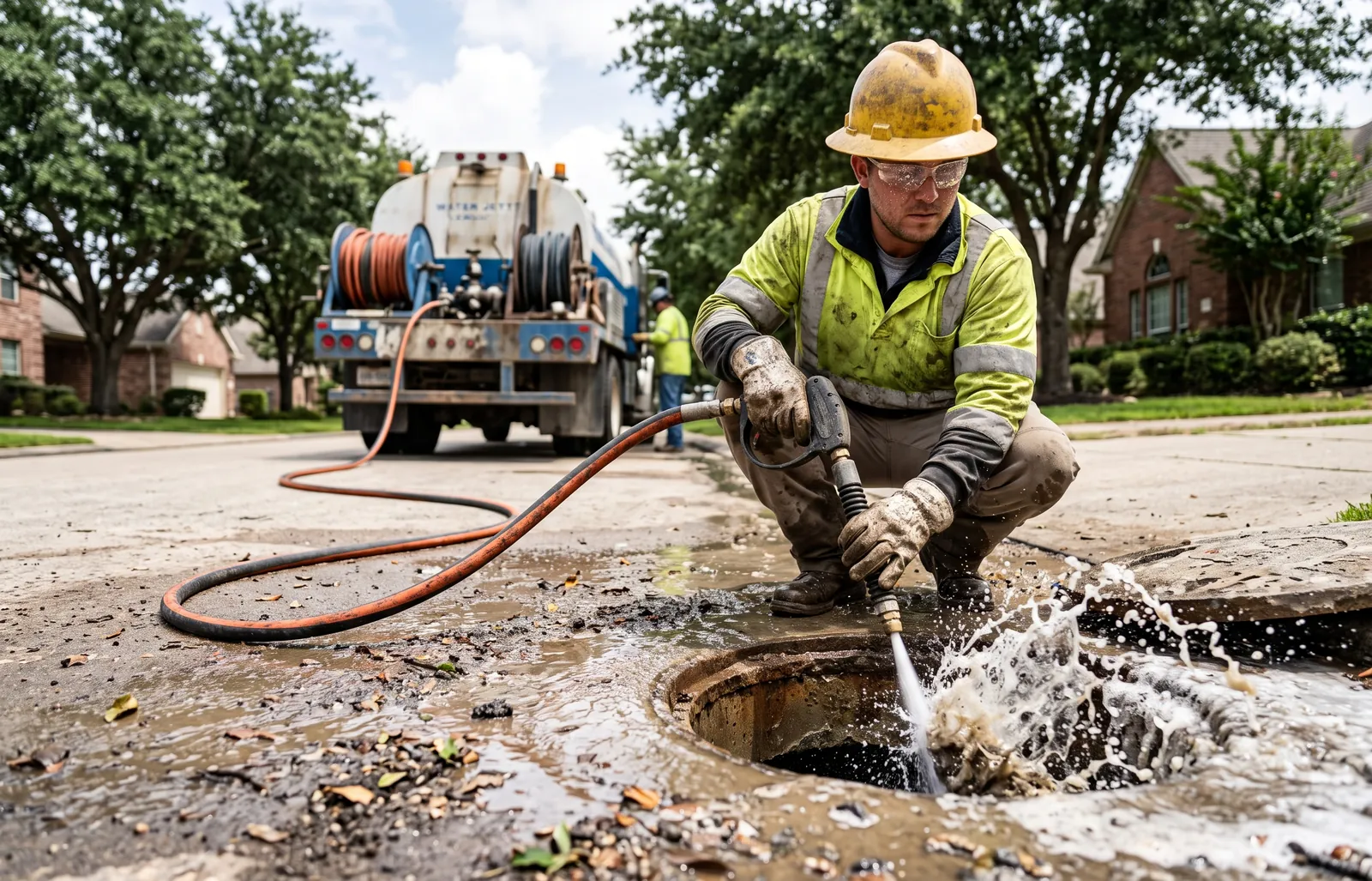
Technician hydro jetting a blocked septic line from a street clean out with the jetter truck behind

What hydro jetting does that a drain snake cannot

A drain snake is a cable with a cutting head. It bores a hole through a blockage, which restores flow immediately and feels like a fix. But the grease, scale and root hair lining the rest of the pipe wall are still there, and they catch the next thing that passes. That is why snaked lines clog again on a shortening cycle.

Hydro jetting runs a hose down the line with a nozzle that fires water backward at high pressure. The jets scour the full inside diameter of the pipe and flush the debris toward the tank. What comes out is not a plug, it is the coating that was building toward the next plug.

The tell: if the same line has been cleared more than twice in two years, snaking is treating the symptom. Jetting treats the pipe.

What we clear

  • Tree roots. Roots find joints and hairline cracks, then spread into a mat inside the pipe. Common in older Conroe neighborhoods with mature oaks and pines.
  • Grease and soap scale. Kitchen and laundry lines narrow gradually as fats cool and solidify against the pipe wall.
  • Mineral scale. Hard water leaves deposits that build up over decades and roughen the interior, which makes everything else stick faster.
  • Field line laterals. Biomat and sediment inside drain field laterals restrict how much effluent the field can accept.
  • Sludge in commercial lines. Restaurant and shop drains carrying heavy solids day after day.

Jetting drain field laterals

Field lines are where jetting earns its keep. As effluent filters through the laterals, a biological film called biomat forms in and around the perforations. A moderate layer is normal and even necessary. A heavy one blocks flow, backs effluent into the tank and eventually surfaces on the lawn.

Jetting the laterals can restore acceptance and buy a field years of additional life. It is not a cure for a field that has already been sealed with solids, and we will tell you plainly which situation you are in rather than selling a service that will not work.

When jetting is not the answer

Honesty here saves you money. Jetting will not help if the pipe is collapsed, offset at a joint, or crushed. Pressurized water in a broken line can make the damage worse. That is why we camera the line first on any repeat clog. If the pipe is structurally failed, the fix is excavation and replacement, and we will show you the footage rather than ask you to take our word for it.

The service

What a jetting visit includes

We diagnose before we pressurize. Sending water down a broken pipe makes a repair job into a bigger repair job.

Camera inspection first

On any repeat blockage we run the line on camera before jetting, so we know whether the pipe can take the pressure.

Full-diameter scouring

Rotating and rear-facing jets cut the buildup off the entire pipe wall, not just a channel through the middle.

Nozzle matched to the blockage

Root cutting, grease removal and scale need different heads and pressures. We carry the range rather than forcing one setup.

Pressure matched to the pipe

Older clay and thin-wall PVC get lower pressure. Blowing out a joint to clear a clog is not a win.

Debris captured at the tank

What we flush loose is pumped out rather than left to settle in the tank or push into the field.

Findings in writing

Camera stills, what we found, and whether the line needs repair rather than another cleaning.

How it runs

How a jetting call runs

Diagnosis, then clearing, then verification. The last step is the one most companies skip.

  1. Locate the access

    We find the clean out or open the tank to reach the line from the right direction.

  2. Inspect

    Camera down the line to identify what the blockage is and confirm the pipe is sound enough to jet.

  3. Jet the line

    Hose fed to the far end, then drawn back so the jets scour the wall and carry debris toward the tank.

  4. Verify and report

    Camera back through to confirm the wall is clean, debris pumped out, findings emailed to you.

Straight answers

Hydro jetting questions

If yours is not here, call or text. We answer it on the phone without sending a truck first.

Ask us directly

It is, when the pressure is matched to the pipe and the line has been inspected first. Older clay and thin-wall PVC get lower pressure. We camera any line with a repeat blockage before jetting, because pressurizing a cracked or offset pipe can turn a cleaning job into an excavation.

A snake bores a hole through the blockage and restores flow. Jetting scours the full inside diameter of the pipe and removes the coating that caused the blockage. Snaking buys weeks or months. Jetting resets the pipe.

It can restore laterals restricted by biomat and sediment, which sometimes adds years to a field. It cannot fix a field that has been sealed by solids escaping a neglected tank. We inspect first and tell you which situation you are in before quoting.

One to three hours for most residential lines, depending on length, how severe the buildup is, and whether a camera inspection is part of the visit. Field lateral jetting and commercial lines take longer.

There is no fixed schedule. Most homes never need it. Properties with mature trees over the line, or kitchens that send heavy grease down the drain, may benefit every few years. If your line clogs on a predictable cycle, that cycle is your schedule.

Same clog, third time this year?

Tell us how often it comes back and how it was cleared last time. That usually tells us what is actually wrong.

Text us